Start Here: Your Household Readiness Plan
Set goals, map your hazards, pack a kit, line up your neighbors and test the plan with a household drill.
Homesteading & Survival · Homesteading & Survival Courses
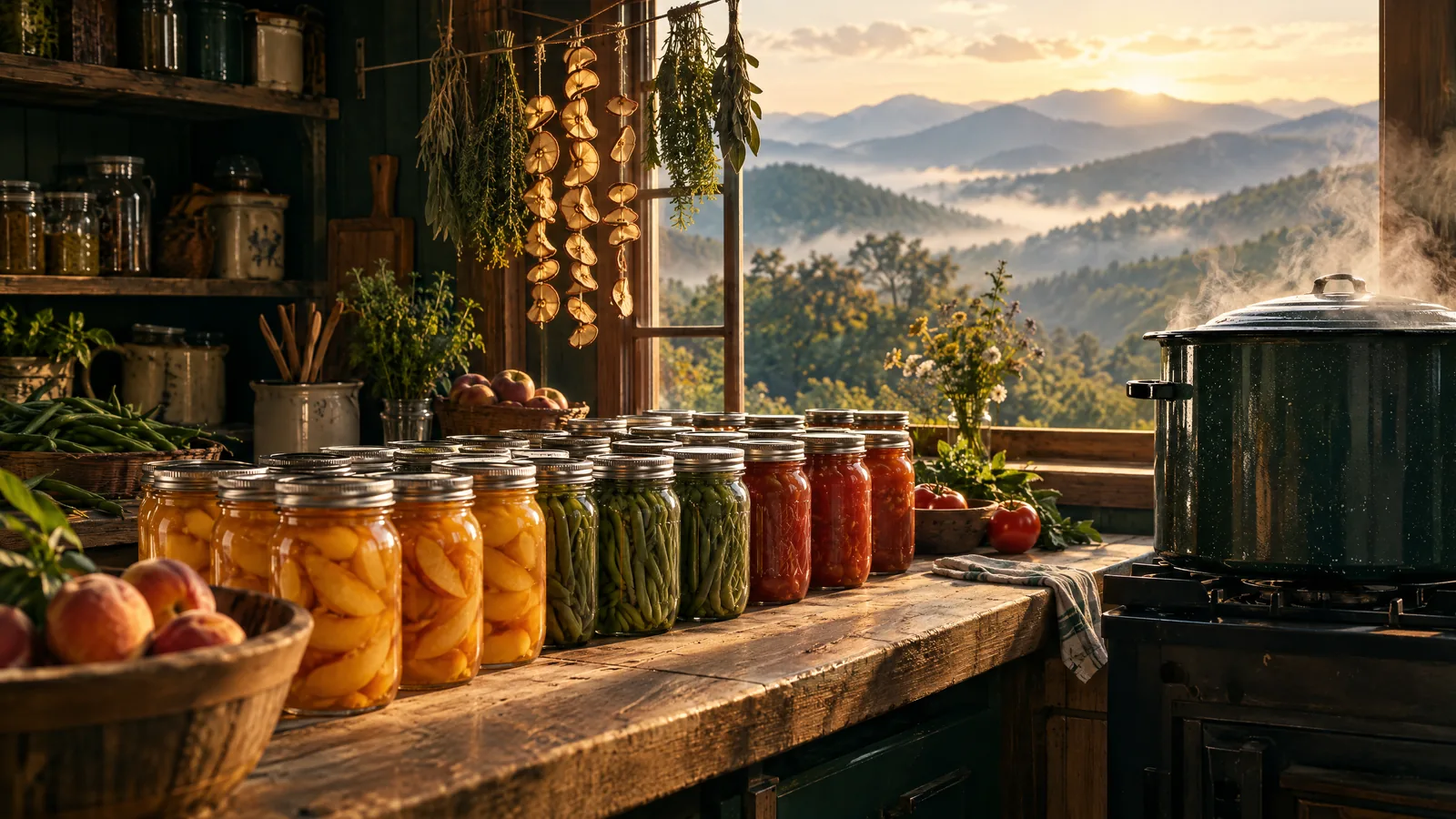
Can, pickle, ferment and dry food safely using USDA-tested methods.
Monthly: $0 today with a card, then $34 on day 8 unless you cancel before then. After the trial, 30 days' notice applies. Active on-campus students have academy access included. Check your existing student account before buying another subscription.
For beginners who want shelves of food they can trust. You will learn why some foods need a pressure canner, how to read an NCHFP recipe and altitude table, how a boiling-water batch of apples and a pressure batch of green beans run from start to finish, how to acidify tomatoes, ferment pickles, dry fruit and make jerky within tested limits, when oxygen absorbers help, and how to spot and handle unsafe jars. About 12 hours, with an optional supervised batch of apples.
Learn why low-acid foods need pressure canning, read a tested recipe correctly, and can one batch of fruit in a boiling-water canner.
Ferment pickles, dry fruit, make jerky within tested limits, pack dry foods with oxygen absorbers, check seals and storage, handle unsafe jars and plan a preservation day.
Set goals, map your hazards, pack a kit, line up your neighbors and test the plan with a household drill.
Store, treat and protect drinking water, and keep a household clean when the taps or sewer stop working.
Cook, store and stock food your household will eat, with or without power.