Martial Arts · Martial History & Supporting Studies
Free preview
How to Study Martial History
Lesson 1 of Martial Arts of the World: A History. Anyone can read this lesson with no account. Every lesson after this one is for students.
Foundations: How to Study Martial History
The tools this course uses to separate record from legend: manuals, court and newspaper records, art, archaeology, oral lineage and the idea of invented tradition. Also explains how each lesson is laid out.
Every fighting art has two histories. One is the story its teachers tell: a founder, a moment of insight, a secret handed down through a line of masters. The other is what can be shown from documents, objects and pictures made at the time. Sometimes the two match. Often they do not, and the gap between them is where most of the interesting questions in martial history sit.
This first lesson is about method. It explains the kinds of evidence historians use, how to weigh a claim, and why a story can be important to a tradition even when it did not happen. The rest of the course travels region by region, from China and Japan to Africa, Europe, the Americas and the Pacific, and every lesson uses the same tools introduced here.
Where it comes from
People have written about fighting for as long as they have written about anything, but the serious study of martial arts as history is fairly young. For much of the twentieth century the main books in English were written by practitioners who repeated what their teachers told them. Founding stories passed from book to book without anyone asking where they came from.
A few researchers started asking much earlier. In China, Tang Hao (died 1959), a lawyer who also worked as an editor at the Central Guoshu Institute, set out to test the stories told about his own arts. His Study of Shaolin and Wudang challenged the claim that Shaolin boxing began with the Indian monk Bodhidharma and the claim that taijiquan came from the Daoist immortal Zhang Sanfeng. In 1932 he went to Chen Village in Henan to read the family's own records. His conclusions angered many teachers, and later scholars have refined some of them, but his method stuck: go to the documents.
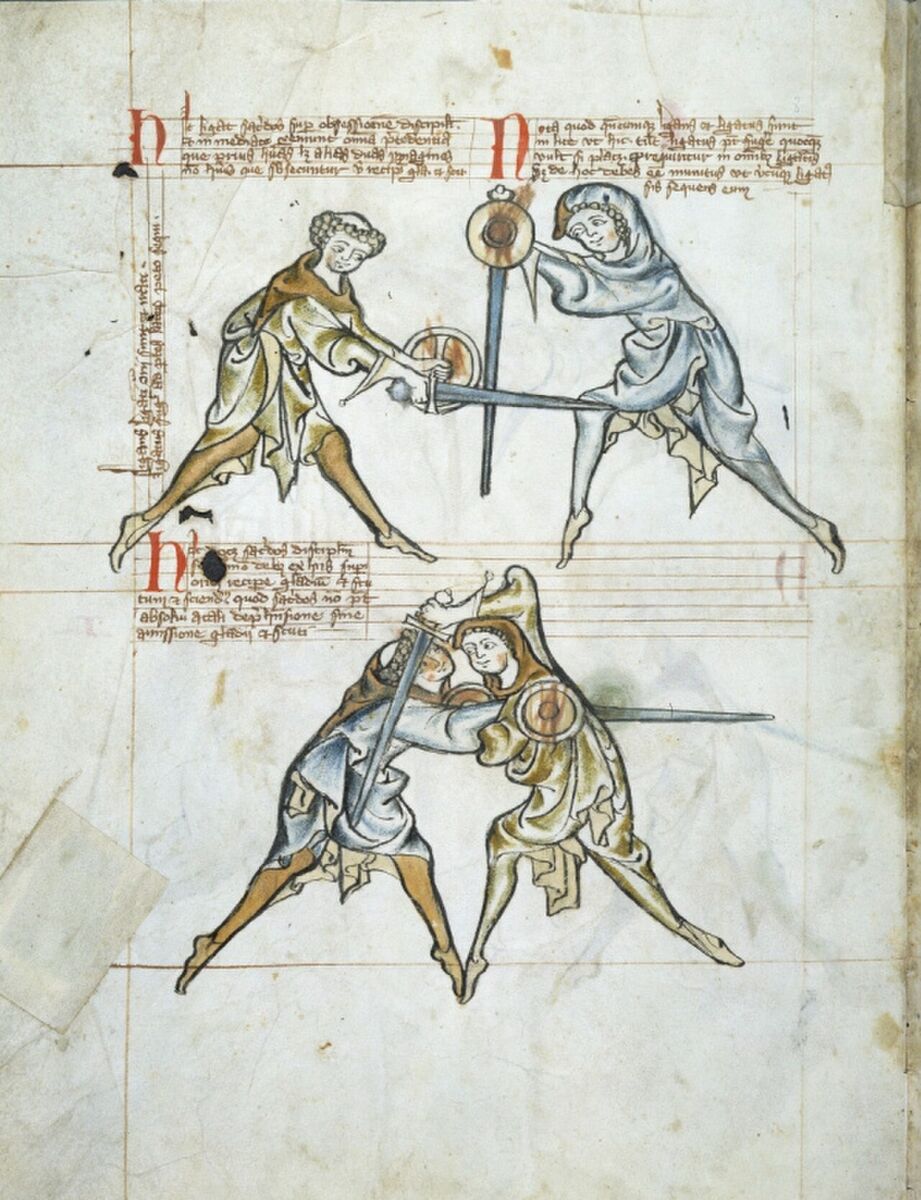
In Europe, a different kind of rediscovery happened. Libraries and armories held illustrated fencing books from the late Middle Ages and the Renaissance that almost nobody read. The oldest known is a Latin manuscript with German fencing terms, now in the Royal Armouries in Leeds, catalogued as MS I.33. It shows a priest teaching a student to fight with sword and buckler (a small round shield). Scholars date it to around 1300, with proposed dates running from about 1270 to the 1320s. Late in the twentieth century, historians such as Sydney Anglo and groups of practitioners began studying these books closely, and the movement now called historical European martial arts grew out of that work. I.33 and the German and Italian manuals each have their own lessons in the Europe module.
Since 2015 the field has had its own academic home. Paul Bowman and Benjamin Judkins founded the journal Martial Arts Studies that year at Cardiff University Press. It publishes historians, anthropologists, sociologists and film scholars side by side. Books such as Peter Lorge's Chinese Martial Arts: From Antiquity to the Twenty-First Century (2012) and Meir Shahar's The Shaolin Monastery (2008) now give students a footing that did not exist a generation ago.
What makes it different
Martial history is harder to write than most history because of the way the arts were passed on. Most teaching was done body to body. A teacher showed a technique, corrected a student's posture, and rarely wrote anything down. Many traditions kept their knowledge private on purpose, either to protect a family's living or to keep an edge over rivals. What did get written was often a list of names or a set of cryptic verses that only made sense to someone who already knew the movements.
So historians work with several kinds of evidence, each with strengths and limits.
Manuals. Fighting books are the richest source when they exist. Qi Jiguang, a Ming general, included a chapter on unarmed boxing with thirty-two illustrated postures in his military handbook Jixiao Xinshu in the 1560s. Fiore dei Liberi, an Italian master documented in the 1380s, left an illustrated treatise in several copies around 1400 to 1410. Manuals tell us what an author wanted readers to learn. They do not tell us how widely the art was practiced, and the pictures can be hard to read without training.
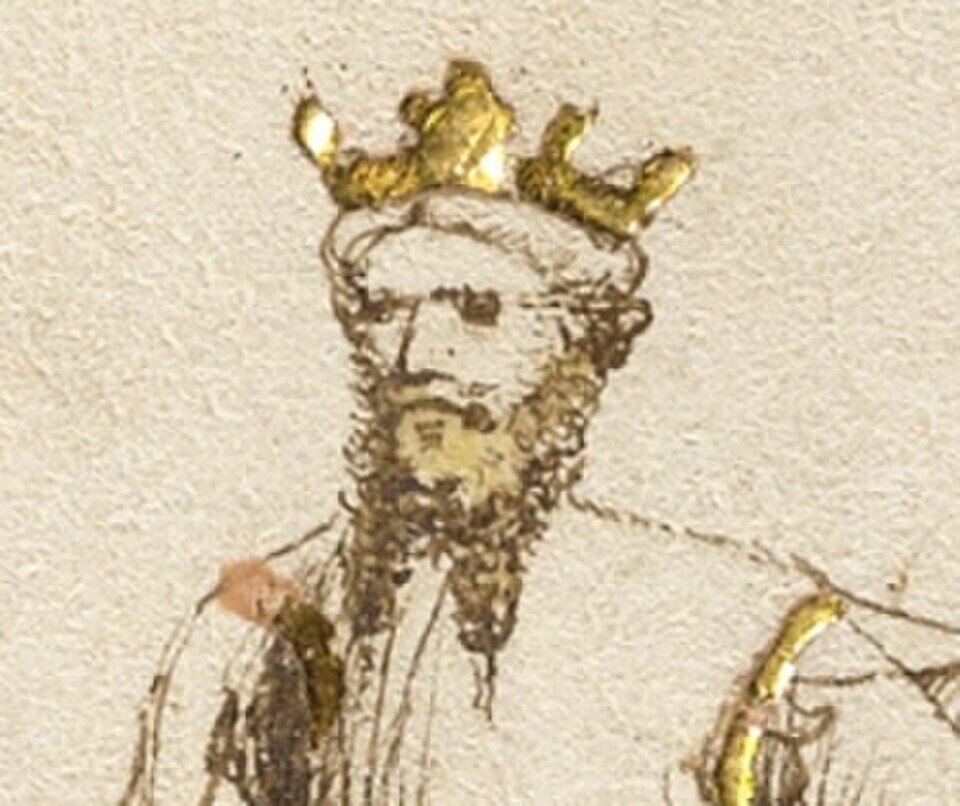
Records. Court documents, army regulations, examination rules, temple inscriptions, police reports, tax rolls and later newspapers rarely describe technique, but they fix dates and names. A stone tablet at Shaolin dated to the Tang dynasty, for example, records that monks helped the future Emperor Taizong in 621. That is far stronger evidence than a story first written down centuries later.
Art. Paintings, prints, murals, sculpture and photographs show clothing, weapons, stances and settings. They also carry the artist's purpose. A woodblock print of a famous swordsman was made to sell, and a temple mural may show an ideal more than a scene.
Archaeology and objects. Excavated weapons, armor, training tools and tomb paintings are evidence that nobody can later rewrite. The next lesson starts with Egyptian tomb paintings of wrestlers at Beni Hasan, about four thousand years old.
Oral lineage. Many arts keep a chain of teachers, recited from founder to present. These lists are valuable, especially for the last three or four generations, where they can be cross-checked with living memory, photographs and records. The older links are often where gaps get filled with famous names.
What makes it theirs
Founding stories are part of a people's identity, and they deserve to be understood on their own terms. The story that Wing Chun began with a Buddhist nun named Ng Mui, or that Shaolin boxing came from Bodhidharma, or that a Thai prisoner named Nai Khanom Tom beat ten Burmese champions, tells students who they are and what their art values. Calling a story a legend places it as something a community believes and tells, which may or may not describe a past event. The story can still teach a great deal about the people who tell it.
The British historian Eric Hobsbawm gave scholars a useful phrase for this. In The Invention of Tradition (1983), edited with Terence Ranger, he argued that many practices that look ancient were assembled recently, often within the last two centuries, and that they claim a link with the past in order to build loyalty or give authority to an institution. The volume's best-known case is the Scottish Highland dress, much of which took its present form in the eighteenth and nineteenth centuries.
Martial arts are full of invented traditions in this sense, and scholars use the term as a description. Kano Jigoro opened the Kodokan in Tokyo in 1882 and built judo from older jujutsu schools, presenting it as both modern and traditional; the historian Inoue Shun wrote about this under the title "The Invention of the Martial Arts" in a 1998 collection on invented traditions in modern Japan. The anthropologist Peter Vail made a similar argument about how Thailand's official history of Muay Thai was shaped in the twentieth century. National governments, especially in the twentieth century, often promoted a fighting art as a symbol of the nation, and that shaped the history that got told.
Legend, claim and record
This course uses three words with care. A legend is a traditional story with no support from sources made at the time. A claim is something a school or person asserts that has not been checked or cannot be. A record is evidence from the period itself: a document, an object, an image or a dated inscription.
Techniques and training
Studying history has a technique too. A few habits do most of the work.
Ask when the story was first written down. A claim about the 500s that first appears in print in the 1900s has a 1,400-year gap to explain. Meir Shahar showed that the link between Bodhidharma and Shaolin fighting is first found in a seventeenth-century text, more than a thousand years after the monk's supposed life.
Ask who benefits. Lineage charts that run back to a famous founder give a teacher authority. Nationalist histories give a state a symbol. That does not make them false, but it is a reason to look for independent confirmation.
Look for independent sources. Two accounts that copy the same earlier book are one source, not two.
Watch for round numbers and famous names. Ten defeated champions, eighteen weapons, 108 movements and links to the most famous person of the age are signs that a story has been shaped for telling.
Separate the art from its story. An art can work well and be worth practicing whether or not its founding story is true. The movements of a style can be old even if its name is new, and the reverse is also common.
Below, the Royal Armouries, which holds MS I.33, shows how researchers turn one page of the manuscript into movement.
The first play of Manuscript I.33 (Royal Armouries)
1Weapons
Weapons are often the best evidence a martial historian has, because they survive. A museum can measure a sword's length, balance and wear, and that physical evidence can test what a text or a legend says. Japanese swordsmiths often signed the tang of a blade (the part hidden inside the handle) and sometimes added a date, which lets historians follow schools of smiths across centuries. Chinese military handbooks such as Qi Jiguang's included drawings of the weapons his soldiers carried, and those drawings can be compared with surviving examples.
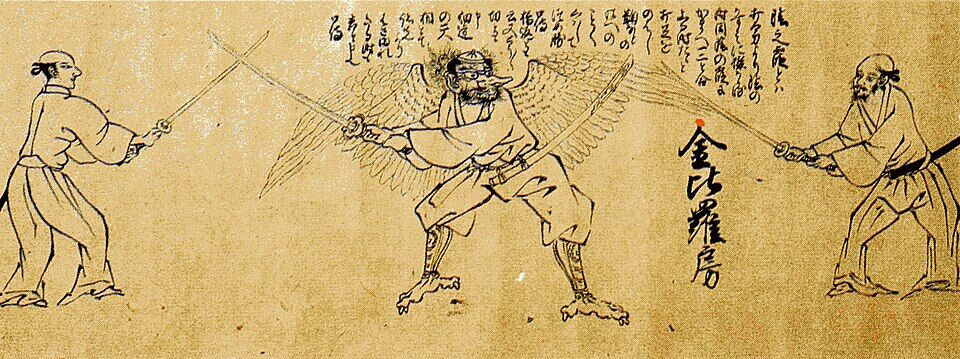
Weapons also show how fighting arts were built. In many cultures the spear, the bow and the sword were trained first, because soldiers needed them. Unarmed skills were often taught as a base for weapon work or as a backup when a weapon was lost. Qi Jiguang said as much: he included boxing in his manual as a way to train the body and as a foundation for weapons, not as a battlefield skill on its own. The third lesson in this module looks at how weapon training shaped empty-hand arts in more detail.
There is a caution here too. Weapons made for display, ceremony or later stage performance can be mistaken for battlefield arms. A heavy, ornate blade in a temple may never have been meant for use.
2Styles and branches
Martial history is studied by several kinds of people, and they ask different questions.
Academic historians work from written sources and place the arts in the history of states, armies and religions. Lorge and Shahar are examples. Anthropologists and sociologists study living practice: how a school works, what training means to people, how an art changes when it moves abroad. Peter Vail's work on Muay Thai and Thomas A. Green's encyclopedia of martial arts across the world draw on this approach. Practitioner-historians, who often read the old languages and train the techniques, test interpretations of manuals with their own bodies. The historical European martial arts community is the largest example.
Each group catches mistakes the others miss. A historian may misread a technique. A practitioner may accept a lineage story without checking it. Good work in this field now usually draws on both kinds of knowledge.
There are also official histories: the accounts published by federations, governments and the headquarters of styles. They are worth reading because they show how an art presents itself, and they often hold useful dates and names. They are rarely neutral.
3People to know
- Qi Jiguang (1528 to 1588). Ming general who fought coastal pirates. His Jixiao Xinshu is one of the earliest Chinese military texts to describe unarmed boxing in detail.
- Fiore dei Liberi (active about 1381 to 1409). Friulian master whose illustrated Fior di Battaglia covers wrestling, dagger, sword, spear and mounted combat.
- Tang Hao (died 1959). Chinese lawyer and martial arts researcher who tested the Bodhidharma and Zhang Sanfeng stories against documents and visited Chen Village in 1932.
- Eric Hobsbawm (1917 to 2012). British historian whose idea of invented tradition is now used across the field.
- Sydney Anglo. British historian whose The Martial Arts of Renaissance Europe (Yale University Press, 2000) brought European fighting books into mainstream scholarship.
- Meir Shahar. Historian at Tel Aviv University and author of The Shaolin Monastery: History, Religion, and the Chinese Martial Arts (2008), the standard study of Shaolin.
- Peter Lorge. Historian at Vanderbilt University whose 2012 book surveys Chinese martial arts from the Bronze Age to the present.
- Paul Bowman and Benjamin Judkins. Founders of the journal Martial Arts Studies in 2015. Judkins and Jon Nielson also wrote The Creation of Wing Chun (2015), a social history of southern Chinese martial arts.
4Things to know
How the lessons are laid out. Every lesson in this course follows the same order. It opens by placing the art in time and place. "Where it comes from" gives the history and separates legend from record. "What makes it different" covers mechanics and strategy. "What makes it theirs" covers culture: language, religion, music, dress and who practiced the art. "Techniques and training" names techniques in the art's own language. "Weapons" covers arms or explains why an art stayed unarmed. "Styles and branches" covers schools and governing bodies. "People to know" lists real, verifiable people. "Things to know" covers etiquette, myths and how to visit. Each lesson ends with questions to check yourself and a list of sources.
Where topics live. When an art or person has a full lesson elsewhere, other lessons mention it briefly and point to it. Bruce Lee, for example, appears in several places but is covered in the Americas module, and judo has its own lesson in the Japan module.
How to judge a school's claims. When a school says its art is thousands of years old, or that its founder learned from a hidden master, ask what the earliest source is and when it was made. Ask whether the lineage can be checked for the last few generations by name, place and date. Treat a teacher who welcomes these questions as a good sign.
Common myths to drop. No reliable source supports a single origin for all Asian martial arts. Age and secrecy are poor guides to quality. A sport version of an art is not automatically less "authentic" than a traditional one, since many traditional forms were themselves organized in the last 150 years.
Check yourself
Sources
- Eric Hobsbawm and Terence Ranger, eds., The Invention of Tradition (Cambridge University Press, 1983).
- Peter A. Lorge, Chinese Martial Arts: From Antiquity to the Twenty-First Century (Cambridge University Press, 2012).
- Meir Shahar, The Shaolin Monastery: History, Religion, and the Chinese Martial Arts (University of Hawai'i Press, 2008).
- Inoue Shun, "The Invention of the Martial Arts: Kano Jigoro and Kodokan Judo," in Stephen Vlastos, ed., Mirror of Modernity: Invented Traditions of Modern Japan (University of California Press, 1998), 163-173.
- Benjamin N. Judkins and Jon Nielson, The Creation of Wing Chun: A Social History of the Southern Chinese Martial Arts (SUNY Press, 2015).
- "Martial Arts Studies journal turns 10", Cardiff University, https://www.cardiff.ac.uk/news/view/2978145-martial-arts-studies-journal-turns-10
- "Royal Armouries Ms. I.33", Wikipedia, https://en.wikipedia.org/wiki/Royal_Armouries_Ms._I.33
- "Fiore de'i Liberi", Wiktenauer, https://wiktenauer.com/wiki/Fiore_de%27i_Liberi
- "Tang Hao", Wikipedia, https://en.wikipedia.org/wiki/Tang_Hao
Continue with the full course
This free preview is lesson 1 only. Enroll to open the rest of Martial Arts of the World: A History.